
-
Hernia Meshes
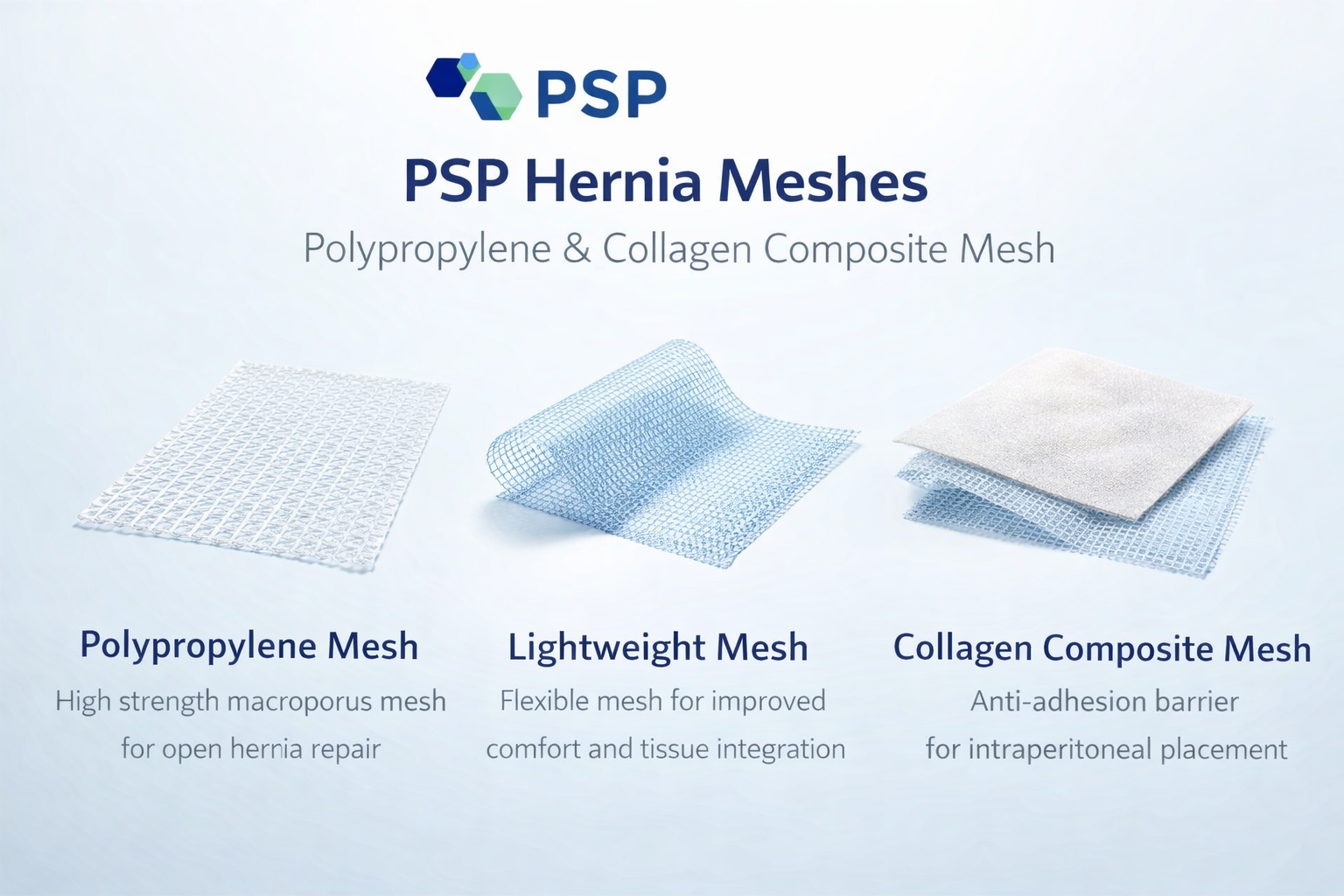
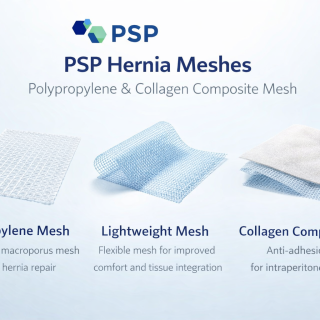
PSP Hernia Meshes are sterile surgical implants designed to reinforce weakened abdominal wall tissue during hernia repair procedures. Manufactured from high-quality medical-grade materials, these meshes provide strong mechanical support while promoting tissue integration and long-term stability.
Our mesh range includes polypropylene meshes for open hernia repair and collagen-coated meshes designed for intraperitoneal placement, providing surgeons with reliable solutions for various hernia repair techniques.
The meshes are engineered for optimal strength, flexibility, and biocompatibility, ensuring ease of handling and improved patient outcomes.
Mesh Types Available
Polypropylene Hernia Mesh (PP Mesh)
Medical-grade polypropylene monofilament mesh designed for reinforcement of soft tissue during hernia repair.
Typical use:
Open inguinal hernia repair, ventral hernia repair, incisional hernia repair.Key features:
• High tensile strength
• Excellent tissue integration
• Lightweight and flexible construction
• Macroporous structure to support tissue ingrowth
• Easy trimming and placement during surgery
• Long-term mechanical stability
• Non-absorbable permanent reinforcement
Collagen-Coated Polypropylene Mesh
Composite mesh consisting of polypropylene mesh with a collagen barrier layer.
The collagen layer helps reduce adhesions when the mesh is placed in contact with abdominal organs.
Typical use:
Laparoscopic hernia repair and intraperitoneal mesh placement.Key features:
• Anti-adhesion collagen barrier
• Strong polypropylene reinforcement layer
• Suitable for intraperitoneal placement
• Promotes tissue integration on abdominal wall side
• Reduces risk of organ adhesion
• Flexible and easy to handle during surgery
Key Features of PSP Hernia Meshes
• High strength polypropylene construction
• Optimal pore size for tissue ingrowth
• Excellent biocompatibility
• Soft and flexible mesh design
• Sterile single-use packaging
• Easy to trim to surgical requirements
• Reliable long-term abdominal wall reinforcement
Popular Hernia Mesh Sizes
Surgeons commonly use standard mesh sheets that can be trimmed during surgery.
Most commonly used sizes include:
Mesh Size Typical Use 6 × 11 cm Inguinal hernia repair 7.5 × 15 cm Standard inguinal repair 10 × 15 cm Lichtenstein repair 15 × 15 cm Ventral hernia 20 × 15 cm Incisional hernia 30 × 30 cm Large abdominal wall reconstruction Most popular hospital sizes:
6 × 11 cm
7.5 × 15 cm
10 × 15 cm
15 × 15 cm
Mesh Variations
Lightweight Polypropylene Mesh
Lower material density for improved flexibility and patient comfort.
Advantages:
• Reduced foreign body sensation
• Better abdominal wall movement
• Faster tissue integration
Standard Weight Polypropylene Mesh
Traditional mesh used in most open hernia repairs.
Advantages:
• High mechanical strength
• Long clinical history
• Reliable surgical performance
Composite Mesh (PP + Collagen Barrier)
Designed for laparoscopic procedures where mesh contacts abdominal organs.
Advantages:
• Adhesion barrier layer
• Safe intraperitoneal placement
• Strong abdominal wall support
Surgical Applications
PSP hernia meshes are suitable for:
• Inguinal hernia repair
• Ventral hernia repair
• Incisional hernia repair
• Umbilical hernia repair
• Laparoscopic hernia repair
• Abdominal wall reconstruction
Sterility
All meshes are supplied sterile and ready for surgical implantation. Sterilization is performed using validated medical sterilization processes to ensure product safety and integrity.
1 in stock (can be backordered)
Hernia Mesh
Key Features of PSP Hernia Meshes
• High strength polypropylene construction
• Optimal pore size for tissue ingrowth
• Excellent biocompatibility
• Soft and flexible mesh design
• Sterile single-use packaging
• Easy to trim to surgical requirements
• Reliable long-term abdominal wall reinforcement
Bestsellers


Reviews
There are no reviews yet.