
Alginate & Chitosan Wound Dressings
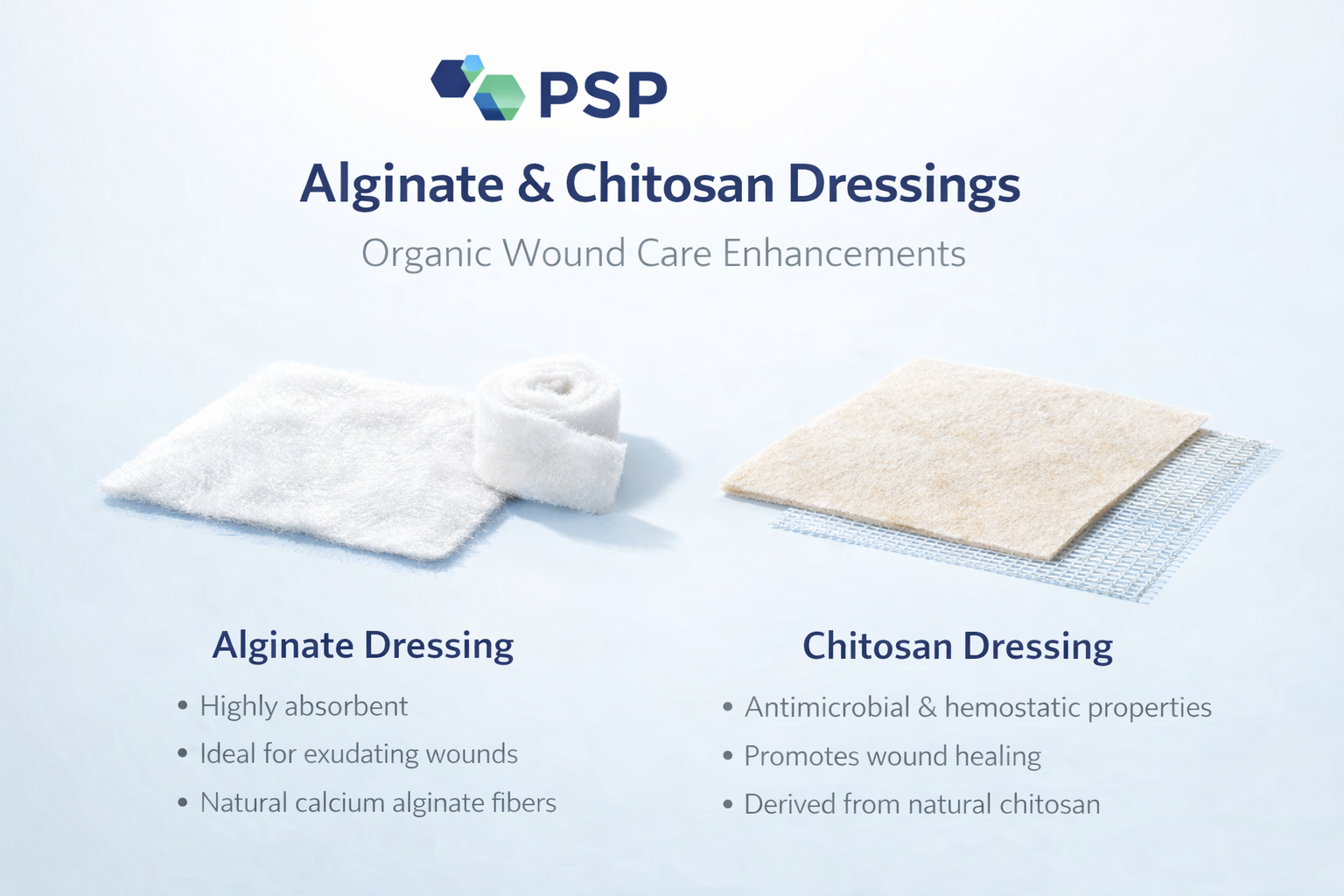
PSP Advanced Wound Dressings include Alginate and Chitosan-based dressings designed for effective wound management and rapid healing. These dressings provide high absorbency, promote a moist wound environment, and support natural tissue regeneration.
Manufactured from biocompatible natural polymers, PSP wound dressings help manage exudate, reduce infection risk, and improve patient comfort.
They are suitable for use in hospitals, surgical centers, emergency care, and outpatient wound management.
Dressing Types Available
Alginate Wound Dressing
Alginate dressings are produced from natural calcium alginate fibers derived from seaweed. When the dressing comes into contact with wound exudate, it forms a soft gel that maintains a moist healing environment.
Key Features
• Highly absorbent for moderate to heavy exuding wounds
• Forms soft gel upon contact with wound fluid
• Maintains optimal moist wound healing environment
• Easy and atraumatic removal
• Supports natural wound healing process
• Biocompatible and biodegradable
Typical Uses
Alginate dressings are commonly used for:
• Surgical wounds
• Traumatic wounds
• Diabetic foot ulcers
• Pressure ulcers
• Venous leg ulcers
• Cavity wounds with heavy exudate
Chitosan Wound Dressing
Chitosan dressings are produced from natural chitosan polymer derived from chitin. They provide antimicrobial activity and help accelerate wound healing.
Key Features
• Natural antimicrobial properties
• Promotes blood clotting and hemostasis
• Supports rapid wound healing
• Biocompatible and biodegradable
• Helps reduce infection risk
• Maintains moist wound environment
Typical Uses
Chitosan dressings are ideal for:
• Acute bleeding wounds
• Surgical incisions
• Trauma wounds
• Burn wounds
• Post-operative wound care
Key Benefits of PSP Wound Dressings
• High fluid absorption capacity
• Maintains moist wound healing environment
• Supports tissue regeneration
• Reduces wound contamination risk
• Soft and conformable dressing material
• Easy application and removal
• Sterile single-use packaging
Dressing Variations
PSP wound dressings may be supplied in several formats to meet clinical needs.
Alginate Rope Dressing
Soft fibrous rope designed for deep cavity wounds.
Typical use:
• Sinus wounds
• Surgical cavities
• Deep ulcer wounds
Alginate Sheet Dressing
Flat sheet dressing used for surface wounds.
Typical use:
• Pressure ulcers
• Surgical wounds
• Traumatic wounds
Chitosan Hemostatic Dressing
Designed to control bleeding and accelerate clot formation.
Typical use:
• Emergency trauma care
• Surgical procedures
• Military or emergency medicine
Most Popular Dressing Sizes
Hospitals typically stock standard dressing sizes for convenience.
| Dressing Size | Typical Application |
|---|---|
| 5 × 5 cm | Small wounds |
| 5 × 10 cm | Surgical incision |
| 10 × 10 cm | Moderate wounds |
| 10 × 20 cm | Large wounds |
| 15 × 15 cm | Ulcers or burns |
Most commonly used hospital sizes:
10 × 10 cm
10 × 20 cm
Packaging
Dressings are typically supplied as:
• Individually sterile packed units
• Multi-pack hospital cartons
• Ready-to-use sterile wound care products
Clinical Applications
PSP alginate and chitosan dressings are suitable for:
• Surgical wound care
• Trauma wound management
• Chronic ulcers
• Burn wounds
• Post-operative wound care
• Emergency bleeding control
Sterility
All dressings are supplied sterile and ready for immediate clinical use. Sterilization is performed using validated medical sterilization processes to ensure product safety and quality.
7.5 × 15 cm
10 × 15 cm
15 × 15 cm
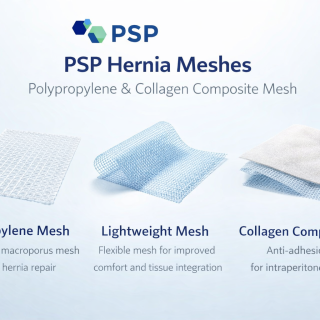
Mesh Variations
Lightweight Polypropylene Mesh
Lower material density for improved flexibility and patient comfort.
Advantages:
• Reduced foreign body sensation
• Better abdominal wall movement
• Faster tissue integration
Standard Weight Polypropylene Mesh
Traditional mesh used in most open hernia repairs.
Advantages:
• High mechanical strength
• Long clinical history
• Reliable surgical performance
Composite Mesh (PP + Collagen Barrier)
Designed for laparoscopic procedures where mesh contacts abdominal organs.
Advantages:
• Adhesion barrier layer
• Safe intraperitoneal placement
• Strong abdominal wall support
Surgical Applications
PSP hernia meshes are suitable for:
• Inguinal hernia repair
• Ventral hernia repair
• Incisional hernia repair
• Umbilical hernia repair
• Laparoscopic hernia repair
• Abdominal wall reconstruction
Sterility
All meshes are supplied sterile and ready for surgical implantation. Sterilization is performed using validated medical sterilization processes to ensure product safety and integrity.


Reviews
There are no reviews yet.